
The Ordinary Multi-Peptide + HA vs. Copper Peptides
The copper version lists a copper-containing peptide alongside other selected peptides. Multi-Peptide + HA has the lower recorded price for 30 mL. The labels alone do not establish whether paying more will give you better results.
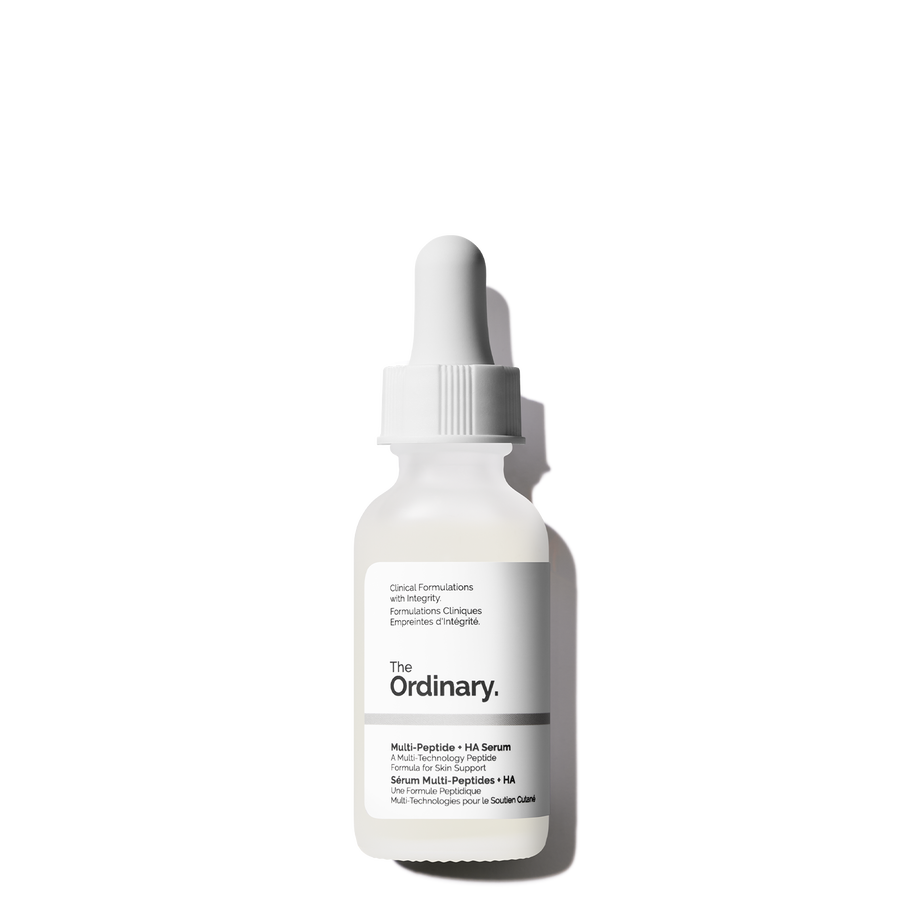
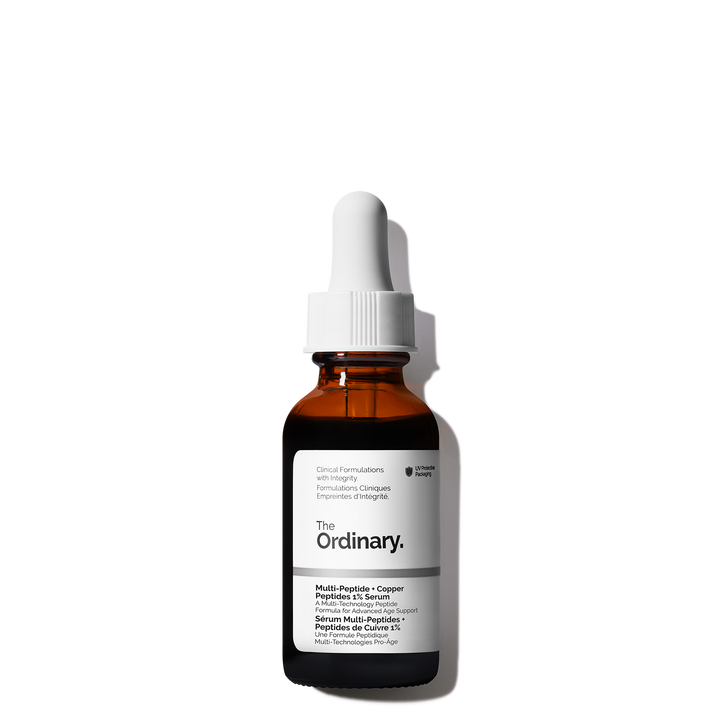
Multi-Peptide + Copper Peptides 1% Serum
30 mL · Facial serum
$32.00USD · Recorded 2026-10-18
What matters in 30 seconds.
The key findings, without the chemistry lesson.
What is documented?
The copper version lists Copper Tripeptide-1. Both selected lists include other shared peptides; these incomplete lists do not show every formula difference.[4][5]
Manufacturer labels
See ingredient differencesWhat does it mean for your purchase?
Multi-Peptide + HA has the lower recorded 30 mL price. Paying more for the copper version does not establish an extra visible benefit.[4][5]
Recorded prices · not a performance ranking
Understand the priceWhat has not been demonstrated?
The selected research does not establish which finished serum works better or is safer. Ingredient studies and scoped safety assessments cannot answer that comparison by themselves.[1][3][2]
Editorial interpretation of selected research
Check the evidenceBefore you choose: neither finished formula is established as safer or more effective by this review. If you have a confirmed ingredient allergy, check the full label before buying.
Understand the evidenceIngredients, price and the gaps.
Compare selected label facts. Tap an ingredient to understand its name.
Compare recorded facts side by side. Missing information is not a negative rating.
| Compare the detailsTwo products. The same questions. | ||
|---|---|---|
| Product basics | ||
| Presentation | 30 mL | 30 mL |
| Format | Water-based serum | Water-based serum |
| How the brand says to use it | The brand directs a few drops in the morning and evening, on unbroken skin, and advises patch testing. Read its current compatibility exclusions before combining with other products.Manufacturer directions, not a personalized routine. | Directions not recorded. Read the manufacturer's current instructions.Manufacturer directions, not a personalized routine. |
| Price & value | ||
| Recorded price | $19.90 USDPrice recorded Excludes tax and shipping. | $32.00 USDPrice recorded Excludes tax and shipping. |
| Price per mL | $0.66 / mL | $1.07 / mL |
| What it contains and what it means | ||
| Peptides, explained Peptides are small chains of the building blocks used in proteins. Their names identify ingredients, not quality scores. Open an explanation to learn what each one means. |
|
|
| How much of each ingredient? A formula is the whole mix. A blend percentage does not tell us the amount of every ingredient. | Several peptides are listed, but their separate amounts are not disclosed. HA means hyaluronic acid; it is not another peptide.Manufacturer disclosure; not independently measured.Individual amounts not verified | The product name states 1% copper peptides. Amounts of the other selected peptides are not recorded.Manufacturer disclosure; not independently measured.Individual amounts not verified |
| Sources & limits | ||
| What we still cannot know | Not established
| Not established
|
| Label source | The Ordinary manufacturer label Label checked Label checked; not a clinical review. | The Ordinary manufacturer label Label checked Label checked; not a clinical review. |
Prices are dated USD observations. Ingredient selections are incomplete; matching names do not establish equivalent formulas or results.
What do the label differences mean?Exact names, disclosures and cost limits
A named copper ingredient is the clearest distinction
Copper Tripeptide-1 appears in the copper product’s recorded list. Its presence identifies a label difference, not a guaranteed extra benefit.
Compare equal bottle sizes
Both records describe 30 mL. The table shows dated prices and their cost per mL. A lower price measures cost, not product quality.
Check the version’s own directions
Do not transfer one product’s compatibility guidance to the other. Read the manufacturer’s current instructions for the specific version you intend to use.
Documented differences
Both selected lists include Acetyl Hexapeptide-8, Palmitoyl Tripeptide-1 and Palmitoyl Tetrapeptide-7. Copper Tripeptide-1 is listed in the copper product. Selected lists omit other ingredients, so absence from a selection does not prove absence from the complete formula.[4][5]
Use this comparison for your decision
If your question is about cost
Compare the same bottle size in the table, with each observation date. Multi-Peptide + HA has the lower recorded cost here; that does not measure the extra benefit of copper.
If your question is about adding copper
Inspect the exact copper name and the complete current directions. We cannot use label presence to promise an extra visible result or to predict your skin’s reaction.
Evidence, explained.
What do the source labels mean?
Human studies describe what happened in their participants and tested preparation. Laboratory studies examine a model, not clinical results in shoppers. Case reports describe individual events, not how often they occur.
Safety assessments review specified uses and concentrations. Manufacturer labels identify recorded product facts. Neither is a guarantee of results or individual tolerance. Source type is not a quality score.
Benefits: neither bottle inherits an ingredient result
Source type: Human ingredient study
A short ingredient trial does not establish which complete serum works better.[1]
Read the evidence and what it means
Source type: Human ingredient study
A four-week randomized placebo-controlled Argireline trial enrolled 60 Chinese participants. It reported improvements in eye-area wrinkle measures; the abstract does not identify either compared retail serum as its treatment.[1]
Different study preparation. Not a test of either compared serum.
Editorial interpretation
Both recorded labels include Acetyl Hexapeptide-8. That shared name does not transfer the trial result to either formula or demonstrate an advantage from adding copper.
Precautions: ingredient assessments have concentration limits
Source type: Safety assessment
The safety assessment cannot certify either finished serum or predict your tolerance.[2]
Read the evidence and what it means
Source type: Safety assessment
The 2025 Acetyl Hexapeptide-8 safety assessment reaches a favorable conclusion up to 0.005%, with insufficient data above that amount. This does not establish harm above it or certify a serum with an unverified pure-peptide concentration.[2]
Editorial interpretation
Neither label check establishes the separate pure amount of Acetyl Hexapeptide-8. Do not compare a commercial blend’s headline percentage directly with the assessment’s pure-ingredient concentration.
Long-term evidence: keep the reviewed scope visible
Source type: Safety assessment
A scoped cosmetic assessment is not years of testing these complete formulas.[3]
Read the evidence and what it means
Source type: Safety assessment
The 2018 safety assessment covers specified peptide identities, uses and concentrations, including Copper Tripeptide-1 and the selected palmitoyl peptides it names. Its favorable conclusion applies within that reviewed scope.[3]
Editorial interpretation
This selected-source review does not establish comparative long-term safety, nor does a missing finished-product study demonstrate that either serum causes harm.
Value: price answers the cost question
Editorial interpretation
The lower recorded cost is not a clinical performance ranking.
Read the evidence and what it means
Editorial interpretation
Use the dated, equal-size prices in Ingredients & price. The lower recorded cost of Multi-Peptide + HA does not measure the additional benefit, if any, of the copper version. Texture and wear have not been tested by Peptivelo.
Which label facts connect this research to these products?
Source type: Manufacturer label
The recorded US labels name Acetyl Hexapeptide-8 in both serums and Copper Tripeptide-1 in the copper version. The selected lists are incomplete; they do not establish that the full formulas differ only by copper. Individual peptide amounts are not independently assayed. Directions may vary by product and reformulation.[4][5]
Manufacturer links establish ingredient presence only. Scientific references support the research statements above. Formulas can change; check your purchased packaging.
Study dataDesign, sample, duration and what each source can tell us
For a closer look at the research behind this review. These sources answer different questions: they are not head-to-head tests of the two retail serums. Their results cannot be combined into a product ranking.
On smaller screens, scroll the table sideways. Open a numbered reference for access limits, funding context and source details.
| Source & design | Sample or model | Duration | Reported finding | How to interpret it |
|---|---|---|---|---|
| Human ingredient study2013[1] | 60 Chinese participants; randomized placebo-controlled ingredient study (3:1 allocation). | 4 weeks | The abstract reports improved eye-area wrinkle measures with Argireline relative to placebo. | Ingredient evidence; neither retail serum was identified as the tested product. |
| Expert safety assessment2018[3] | Expert assessment of specified peptide identities and uses; not one trial cohort. | Not applicable — evidence assessment | The panel’s favorable conclusion is conditional on the reviewed uses, concentrations and peptide identities. | Limited to the identities, uses and concentrations reviewed; not proof of years of finished-formula safety. |
| Expert safety assessment2025[2] | Expert assessment of Acetyl Hexapeptide-8 cosmetic use, not a product trial. | Not applicable — evidence assessment | The 2025 panel gives a favorable conclusion up to 0.005% and finds data insufficient above that concentration. | Favorable conclusion up to 0.005%; insufficient data above that amount. Unknown pure-peptide amounts prevent a finished-serum safety conclusion. |
Reading limit: some records were checked through abstracts or repository summaries, not full papers. See each reference for exactly what was inspected. Scientific review remains pending.
Questions about these products
Is the copper version just the same serum with one extra ingredient?
Check the original sources
Research and safety assessments are separate from manufacturer labels.
How this comparison was preparedScope, review status and limitations
What we cannot tell from the label
The catalog shows selected label peptides, not complete formulas. Individual concentrations may be undisclosed. No independent head-to-head effectiveness or individual tolerance is established here. This editorial draft awaits human review.
Read our methodologyWhere to buy
Check the exact size, current price and shipping at the manufacturer.
No affiliate partnerships are active. Manufacturer links are ordinary links; we do not earn commissions from them. Recorded prices exclude tax and shipping and may have changed.
References
- Human ingredient study
Wang Y, Wang M, Xiao S, Pan P, Li P, Huo J. 2013. American Journal of Clinical Dermatology, 14(2), 147–153.
The Anti-Wrinkle Efficacy of Argireline, a Synthetic Hexapeptide, in Chinese Subjects: A Randomized, Placebo-Controlled StudyDOI: 10.1007/s40257-013-0009-9
Evidence and limitations for reference 1
- What was studied
- Randomized, placebo-controlled; 60 Chinese participants, 3:1 allocation, four weeks.
- What was reported
- The abstract reports improved eye-area wrinkle measures with Argireline relative to placebo.
- What this supports here
- An example of ingredient research with a defined population and duration, rather than a test of either compared copper serum.
- What it cannot establish
- Four weeks in one population. Neither CAIS3 nor The Ordinary’s copper serum is the tested product identified in the abstract. No product winner or long-term safety conclusion follows.
- Commercial context and disclosures
- The publisher reports no funding and no declared conflicts. These are author declarations, not an independent audit.
- What we inspected
- Publisher abstract and acknowledgments inspected; full methods behind subscription were not reviewed.
- Publication status check
- No correction or retraction notice was seen on the inspected publisher page. This is not a comprehensive integrity clearance.
- Expert safety assessment
Johnson W Jr, Bergfeld WF, Belsito DV, et al. 2025. International Journal of Toxicology.
Safety Assessment of Acetyl Hexapeptide-8 Amide as Used in CosmeticsDOI: 10.1177/10915818251340391
Evidence and limitations for reference 2
- What this supports here
- The 2025 panel gives a favorable conclusion up to 0.005% and finds data insufficient above that concentration.
- What it cannot establish
- Not evidence of harm above the assessed amount or certification of a complete serum. Pure-peptide concentrations in this comparison are unverified; blend percentages are not interchangeable.
- Commercial context and disclosures
- CIR assessment includes published and industry-submitted data. Article-specific funding and conflict statements were not verified in this pass; not government approval.
- What we inspected
- Publisher full-text introduction, abstract, composition and use-concentration sections inspected. Underlying toxicology datasets not independently reanalyzed.
- Expert safety assessment
Johnson W Jr, Bergfeld WF, Belsito DV, et al. 2018. International Journal of Toxicology.
Safety Assessment of Tripeptide-1, Hexapeptide-12, Their Metal Salts and Fatty Acyl Derivatives, and Palmitoyl Tetrapeptide-7 as Used in CosmeticsEvidence and limitations for reference 3
- What was studied
- Expert assessment of specified cosmetic peptide ingredients; underlying final report released June 30, 2014.
- What was reported
- The panel’s favorable conclusion is conditional on the reviewed uses, concentrations and peptide identities.
- What this supports here
- Provides a scoped safe-use conclusion for specified peptide identities, practices and concentrations.
- What it cannot establish
- Does not test these finished products or establish their safety over years. NIOD’s exact label name is not silently equated with a different name in the report.
- Commercial context and disclosures
- CIR is funded by the Personal Care Products Council and describes its panel/review process as independent. Industry-submitted data are included; this is not a government approval.
- Source organization and funding context
- What we inspected
- 2018 publisher full-text abstract, ingredient scope and introduction revisited; prior 2014 final-report discussion check retained. Not an independent toxicology reanalysis.
- Manufacturer labelMulti-Peptide + HA Serum — US manufacturer label and 30 mL offer
Evidence and limitations for reference 4
- What this supports here
- Supports the selected ingredient names and identity of Multi-Peptide + HA.
- What it cannot establish
- The checked label does not supply a separate amount for every peptide or independent comparative outcomes.
- Commercial context and disclosures
- Published by the seller and manufacturer.
- What we inspected
- Public US product page
- Manufacturer labelMulti-Peptide + Copper Peptides US product label
Evidence and limitations for reference 5
- What this supports here
- Supports the selected peptide names, product name and 30 mL presentation.
- What it cannot establish
- Manufacturer claims and label checks do not establish clinical superiority over NIOD. Price observation dates are separate from this reference check.
- Commercial context and disclosures
- NIOD and The Ordinary are both DECIEM brands; these are commercial sources, not independent corroboration.
- What we inspected
- Public US product page